
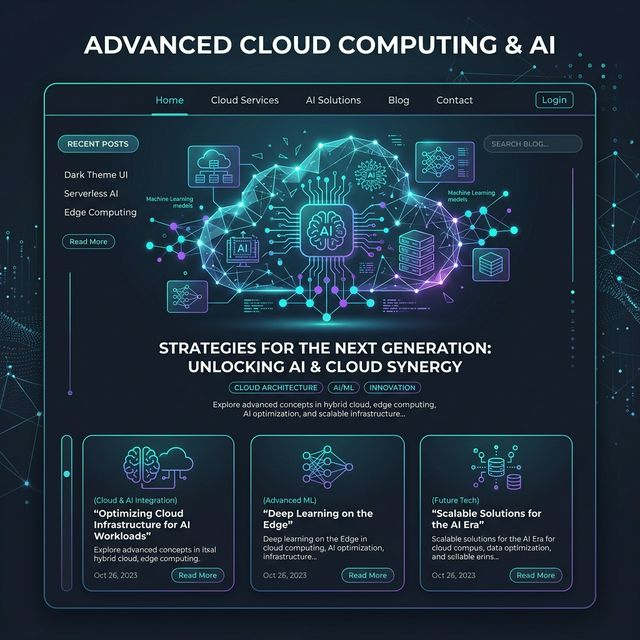
Artificial Intelligence (AI) and Cloud Computing are no longer distinct, isolated technologies. They are rapidly merging into a single, cohesive synergy that is redefining how modern technology platforms scale. In this article, we delve into how serverless AI, machine learning operations (MLOps), and deep learning on the edge can radically change data optimization.
The Rise of Serverless AI
Gone are the days when deploying a machine learning model required provisioning massive, expensive GPU instances that sat idle for 80% of the day. Serverless architectural patterns allow data scientists to trigger complex inference tasks via simple API calls. By moving inference workloads to serverless functions, organizations are seeing a massive drop in compute waste, only paying for the exact milliseconds it takes to process an image or transcribe an audio file.
Edge Computing: Bringing Intelligence Closer to the Source
Another major leap is the adoption of Edge Computing. When autonomous vehicles or IoT sensors need to make split-second decisions, sending data back to a centralized cloud region introduces unacceptable latency. By deploying lightweight, optimized neural networks directly onto edge devices (Edge AI), systems can analyze patterns natively. The cloud then serves as a centralized hub for asynchronous training, aggregating edge data overnight to push smarter models back down the pipeline the next day.
Preparing Your Infrastructure
To capitalize on this synergy, your infrastructure must be hybrid-ready. This means adopting container orchestration gracefully so that workloads can float seamlessly between on-premise edge hardware and public cloud providers based on real-time computational demands.