
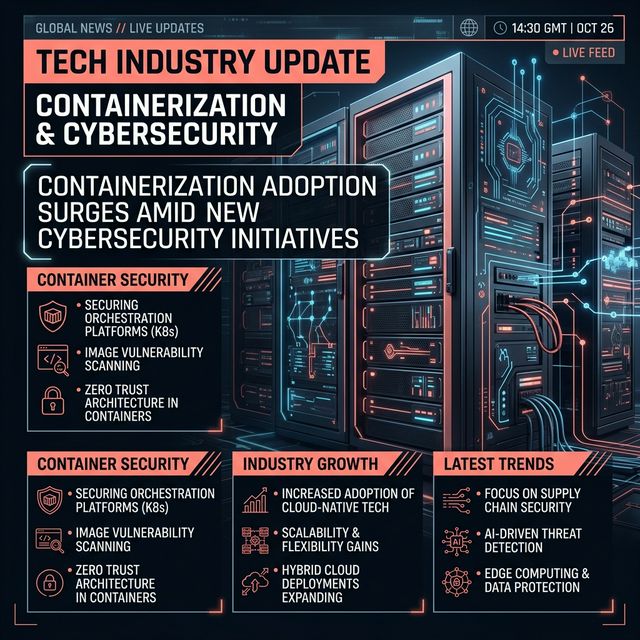
The latest industry reports from the Cloud Native Computing Foundation (CNCF) indicate a massive 80% year-over-year surge in enterprise containerization adoption. However, this rapid shift has brought container security into the sharpest focus we have seen in the last decade.
Kubernetes Under the Microscope
As enterprises heavily shift their monolithic legacy apps into microservices hosted across distributed Kubernetes environments, the attack surface naturally expands. Over the last quarter, we have seen a dramatic rise in targeted attacks against misconfigured orchestration platforms, specifically exploiting exposed API servers and overly permissive RBAC settings.
The Push for Zero-Trust Containers
In response, the industry is fiercely pivoting towards Zero-Trust principles internally. Network policies are tightening, restricting pod-to-pod communication by default. Furthermore, automated CI/CD pipelines are now strictly enforcing image vulnerability scanning long before a container reaches production. We predict that by the end of the year, over 90% of Fortune 500 companies will mandate cryptographic signing for all container images.